
Introduction
A new chapter in global sports has arrived, and it is unlike anything the world has seen before. The Humanoid Robot Sports Games bring together advanced engineering, artificial intelligence, and competitive athletic challenges—all in one groundbreaking event. These Games are not simply a tech exhibition; they represent the beginning of a future where machines compete, learn, and evolve, showcasing just how far robotics has come.
In this blog, we explore the rise of humanoid robot athletics, the technology behind them, the events they compete in, the challenges faced by teams, and how this phenomenon is shaping the future of modern sports.
What Exactly Are the Humanoid Robot Sports Games?
The Humanoid Robot Sports Games is an international competition where robots built in human-like form participate in athletic events. These robots are designed by global research groups, universities, and engineering companies. Each participant robot is built to perform physical tasks that mimic human actions—running, jumping, balancing, lifting, or even playing team sports.

What sets this competition apart is its purpose. While it offers entertainment, its deeper goal is to push the boundaries of robotic intelligence, movement precision, and human–machine synergy. The Games act as a testing ground where innovation meets real-world performance.
The Technology Powering These Humanoid Athletes
Creating a robot capable of athletic performance is an enormous engineering challenge. Developers rely on a combination of the following core technologies:
1. Artificial Intelligence & Machine Learning
AI enables robots to make decisions, adapt to unpredictable situations, and learn movement patterns that improve over time.
2. Vision and Environmental Sensors
Cameras, LiDAR, and motion sensors help robots detect their surroundings, maintain balance, and react to obstacles instantly.
3. High-Performance Motors and Actuators
Robots rely on precision engineering to simulate the mechanics of muscles and joints, enabling smooth and controlled movement.
Personal Finance Tips: A Complete Guide to Managing Your Money Wisely
4. Reinforcement Learning Environments
Before competing, robots undergo virtual training simulations, learning from hundreds of hours of trial and error.
5. Lightweight and Durable Body Materials
Composites such as carbon fiber and reinforced polymers allow robots to move quickly while withstanding impact and pressure.
6. Advanced Control Systems
Teams manage robot stability, energy usage, and strategic decisions through real-time monitoring software.
These technologies work together to create machines capable of performing athletic tasks with surprising accuracy and stability.
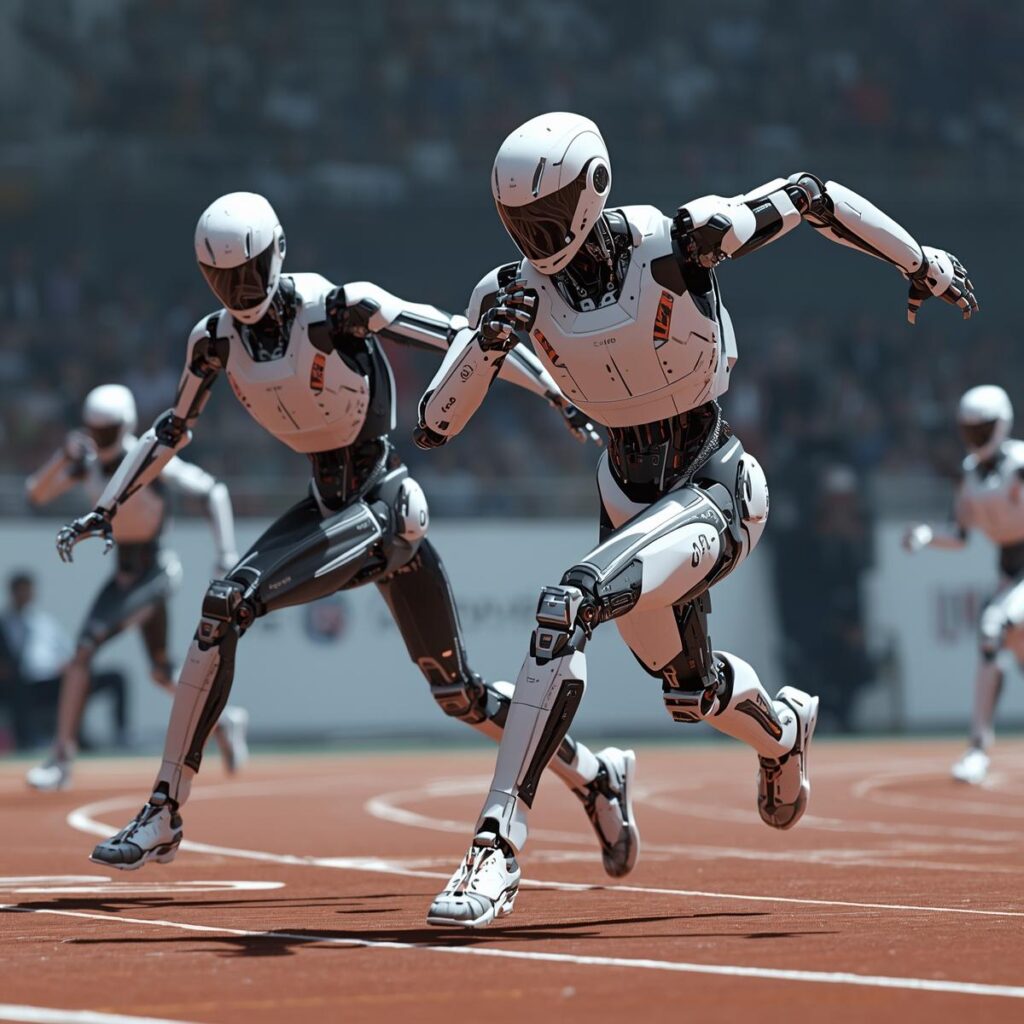
Which Sports Do Humanoid Robots Compete In?
The Games include a diverse selection of sports designed to test every aspect of robotic capability:
1. Sprint Races
Robots run short distances, testing speed, stability, and stride optimization.
2. Robotic Football (Soccer)
One of the most popular events, where robots collaborate, pass, defend, and strategize using AI coordination.
3. Obstacle Challenges
Courses with ramps, steps, and uneven ground push robots to adapt their balance and agility.
4. Weightlifting Events
Strength-focused tasks evaluate mechanical power and precision control.
5. Boxing or Light Combat Sports
Robots engage in controlled matches to demonstrate reflexes, motion prediction, and balanced footwork.
6. Basketball Accuracy Challenges
Robots calculate shooting angles, force, and distance for precision scoring.
7. Balance and Gymnastics Tasks
These events highlight how well robots can manage fine-motor control and stability under pressure.
Every event is designed to mirror real athletic difficulty, pushing robots to their engineering limits.
Why These Games Matter More Than We Think
The impact of the Humanoid Robot Sports Games extends far beyond entertainment.
1. Accelerating Robotics Innovation
The challenges faced during the Games inspire new solutions that later apply to healthcare, logistics, aerospace, and rescue operations.
2. Boosting Global Research and Collaboration
Teams from around the world come together, sharing knowledge that accelerates technological advancement.
3. Inspiring the Next Generation
Students and young engineers gain motivation to explore robotics, programming, and mechanical design.
4. Economic and Industrial Growth
The robotics industry is expanding rapidly, and events like these fuel investments, startup development, and global interest.
5. Setting the Foundation for Human–Robot Interaction
Learning how robots move, react, and collaborate helps shape future use cases—whether in hospitals, factories, or even outer space.
These competitions are shaping the direction of modern robotics more than any other event today.
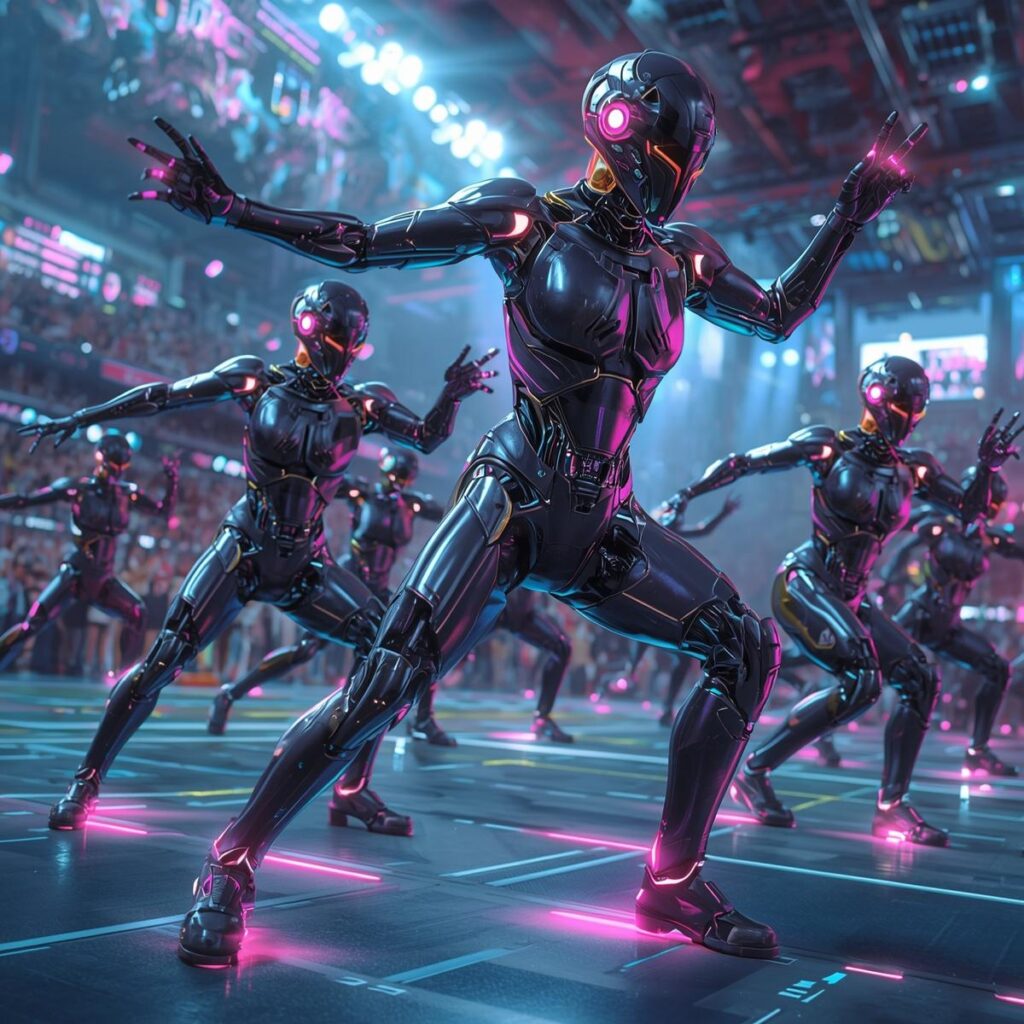
Key Challenges in Robot Athletic Development
Even with advanced engineering, developers face major hurdles:
- High manufacturing and research costs
- Difficulty programming instinctive, real-time reflexes
- Maintaining balance at high speeds
- Battery limitations during long events
- Risk of mechanical damage
- Complexity of programming team strategy (e.g., in football)
These challenges are exactly what make the Games so crucial—they push innovation forward.
What Does the Future Hold?
Experts believe humanoid robot athletics will expand dramatically in coming years. Possible future developments include:
- International robot sports leagues
- Dedicated robotic Olympics
- Hybrid sports featuring humans and robots together
- Smart arenas built for AI-driven competitions
- Complete virtual-physical sport integrations
- Robots performing athletic feats impossible for humans
We are witnessing the birth of an entirely new category of global competition.
Conclusion
The Humanoid Robot Sports Games represent the perfect fusion of engineering brilliance and athletic spirit. These competitions reflect the unwavering human desire to innovate, experiment, and push boundaries. As robotics becomes more advanced, these Games will continue driving progress—transforming industries, inspiring future generations, and reshaping how the world views sports.

In this emerging era, sport is no longer limited to human potential. It is expanding into a future where technology and athleticism evolve side by side.
Frequently Asked Questions (FAQs)
1. Are the Humanoid Robot Sports Games real competitions?
Yes. Multiple countries host official events where research teams present robots that compete in various sports.
2. What makes humanoid robots suitable for athletic events?
Their human-like structure makes them ideal for testing balance, coordination, and complex physical tasks.
3. Do these robots use artificial intelligence?
Absolutely. AI drives decision-making, motion control, obstacle detection, and strategic gameplay.
4. Can robots get damaged during the Games?
Yes. High speeds, collisions, and heavy lifting can lead to mechanical wear or breakage.
5. What industries benefit from this research?
Healthcare, military, space exploration, manufacturing, and emergency response all gain from robotics advancements.
6. Are robot sports meant to replace human sports?
No. Robot sports create a separate category meant to complement—not replace—traditional athletics.
7. Who typically develops these humanoid robots?
Universities, engineering labs, robotics companies, and technology startups are the main participants.
8. How do robots learn athletic skills?
Through simulations, machine learning, and repeated physical training under controlled environments.
9. Will robot sports become mainstream in the future?
Many experts believe they will, especially with the rapid advancement of AI and robotics.



3 comments
moldova guided tours Incredible last-minute deal to Antalya! Found a luxury resort for half the price I saw elsewhere. The room was huge, sea view, modern design, and the food was absolutely delicious. Transfers on time, no stress at all. TravelShop, you are the best! https://kisa.tk/travelshop
tours of morocco 2025 Communication was excellent before and during the trip. We always felt informed. https://twitter.com/travelshoptr
honeymoon packages turkey They went above and beyond to make us comfortable. https://www.instagram.com/travelshopbookings/